AL AFANDY Olive Encyclopedia
From the Olive Tree to Oil — Turning Every Part into Value
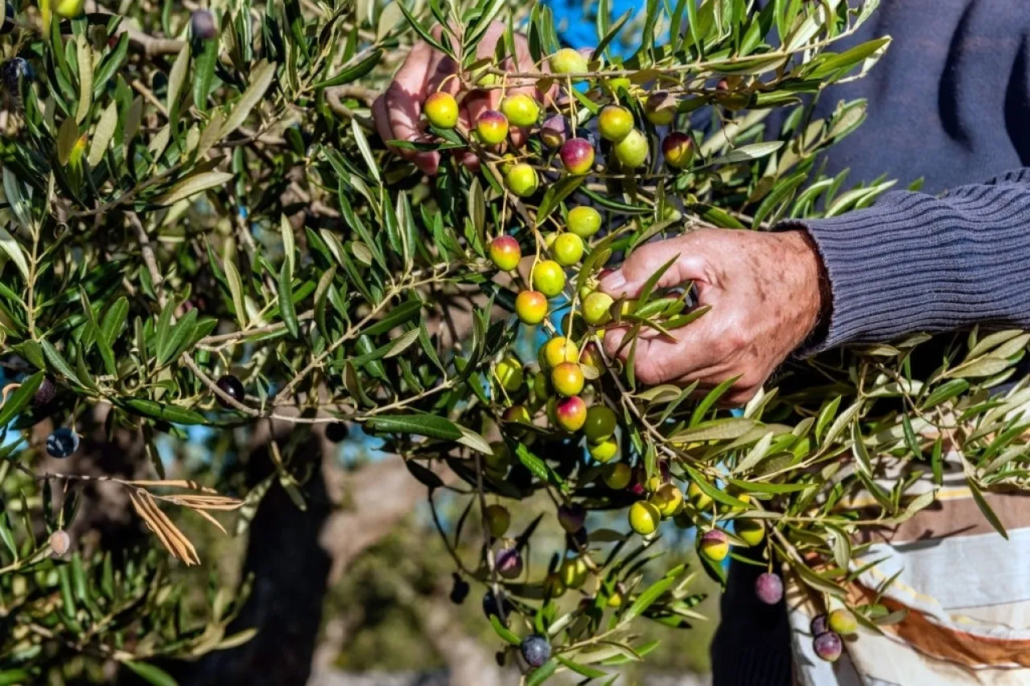
A practical guide covering olive cultivation, fruit, harvesting, oil extraction, oil quality, storage and filling, table olives, leaves, pits, pomace, pruning residues and olive-mill wastewater — connected directly to equipment and business opportunities.
🌳 1. The Olive Tree: Where It Begins
The olive tree Olea europaea L. is a long-lived crop deeply rooted in Mediterranean agriculture. Its value goes beyond the fruit: leaves, pruning wood, pits, pomace and processing residues can all become part of additional value chains.
What Determines Orchard Production?
- Variety and intended use: oil, table olives, or dual-purpose.
- Tree age and planting density.
- Climate, soil, and water availability.
- Pruning, fertilization, and pest management.
- Alternate bearing; project planning should not rely on a single season.
For commercial planning: start with the number of trees, average kg per tree over several seasons, available harvest period, then calculate the required press capacity.
🫒 2. Olive Fruit: Harvesting and Products
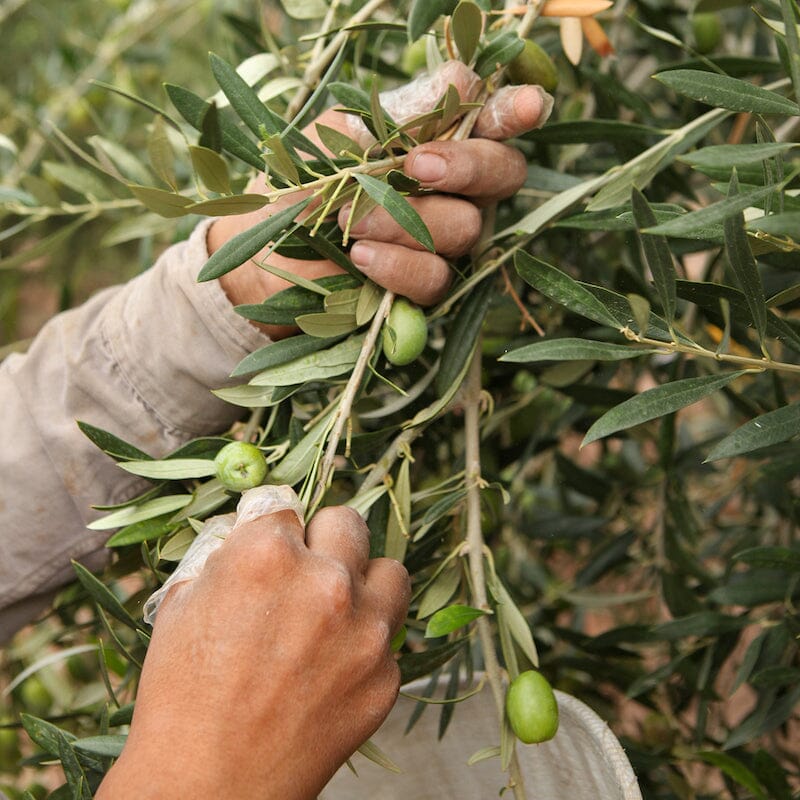
Olive fruit can be processed for oil or table olives depending on variety, maturity and quality. Harvest timing affects both oil yield and sensory characteristics, so the right decision balances quantity with the desired quality.
After Harvest
Sort the fruit, remove leaves and soil, transport it carefully to reduce bruising and fermentation, and process it as soon as practical. Table olives require appropriate sorting, washing, debittering and processing methods.
Possible products: virgin olive oil, table olives, private-label bottled oil, and other olive-based food products according to market demand.
⚙️ 3. Olive Oil Production — Step by Step
- Receiving and weighing: record the crop and track batches.
- Leaf removal and washing: remove impurities and prepare the fruit.
- Crushing: convert olives into paste.
- Malaxation: mix the paste to help oil droplets combine while controlling time and temperature.
- Decanter centrifugation: separate oil from water and solids in two- or three-phase systems.
- Final separation: remove residual moisture and fine impurities.
- Filtration: optional depending on the product strategy; helps remove water and suspended particles.
- Storage: use suitable tanks and protect oil from light, heat, and oxygen.
- Filling: use suitable packaging, labeling, traceability, and branding.
The International Olive Council defines virgin olive oils as oils obtained from the fruit by mechanical or other physical means under conditions that do not alter the oil.
🧪 4. Olive Oil Quality
Olive oil quality cannot be judged by color alone. Commercial classification relies on physical and chemical parameters together with sensory evaluation under recognized standards.
What Do We Monitor?
- Condition of the fruit before pressing.
- Production-line cleanliness.
- Malaxation time and temperature.
- Exposure to oxygen, light, and heat.
- Storage and packaging conditions.
- Analyses required by the target market.
Important: The term “cold pressed” alone does not establish a quality category; classification depends on analytical, sensory, and regulatory requirements.
🌿 5. Olive Leaves: A Valuable By-product
Olive leaves come from pruning and from leaf removal at the mill. They contain phenolic compounds, notably oleuropein and hydroxytyrosol. Scientific literature examines their recovery, drying, extraction and potential applications.
Possible Production Route
Collection and sorting → washing if needed → controlled drying → grinding → extraction → filtration → concentration → filling.
The product may be leaf powder, extraction feedstock, or a standardized extract; food, cosmetic, and supplement products remain subject to local safety and regulatory requirements.
Possible equipment: dryer, grinder, extraction unit, filtration, evaporation/concentration, and filling equipment.
⚫ 6. Olive Pits
After separation, cleaning and drying, olive pits can be handled as a solid biomass material. Research examines their use for thermal energy and biomass, as well as conversion into carbon materials such as biochar or activated carbon through additional industrial processing.
Project Route
Pit separation → cleaning → drying → sizing → storage → suitable direct use or thermal/carbon conversion.
Feasibility depends on residue volume, moisture, drying cost, energy prices, and the local market.
🟤 7. Olive Pomace
Olive pomace is the solid material remaining after oil separation, and its characteristics vary with the extraction system. Its possible uses depend on moisture, pit content, treatment method and local requirements.
Utilization Opportunities
- Drying and energy uses within suitable systems.
- Separate pits as an independent material.
- Composting after appropriate treatment.
- Selected feed applications after evaluating composition, safety, and nutritional balance.
- Recovery of phenolic compounds or other components in specialized projects.
Not all pomace is directly suitable for feed or compost; treatment, analysis, and local requirements are essential.
🌳 8. Pruning Branches and Wood
Pruning residues are a seasonal resource that can be chipped and dried for biomass value chains. Possible routes include wood chips, pellets, briquettes or thermal conversion in suitable facilities.
Possible line: collection → chipping → separation/screening → drying → grinding if needed → pressing → cooling → packing.
Before investing, calculate actual annual residue tonnage, collection distance, moisture, and energy cost.
💧 9. Olive Mill Wastewater
Olive-mill wastewater contains organic load and phenolic compounds and therefore requires responsible management. Research and industrial technologies also investigate recovery of compounds such as hydroxytyrosol and other phenolics before or during treatment.
Possible routes: primary separation → filtration/membranes or other separation technologies → compound recovery → water treatment according to local regulations.
This area requires a separate engineering study because wastewater quantity and composition vary between two-phase and three-phase systems and operating conditions.
🍽️ 10. Table Olives
Not all olives need to be pressed for oil. A dedicated table-olive line can include sorting, grading, washing, debittering, fermentation or other approved processing methods, followed by filling and preservation.
The International Olive Council describes processing methods including Spanish-style green olives with fermentation and other methods depending on the product.
Possible equipment: sorting and grading, washing, processing and fermentation tanks, filling, and preservation/sterilization systems depending on the product.
🏭 11. Turning an Olive Farm into a Complete Business
Level 1 — Farmer
Harvesting + suitable olive press + storage tanks.
Level 2 — Branded Product
Harvesting + pressing + filtration + storage + filling + labeling and traceability.
Level 3 — By-product Utilization
Add pit separation, leaf drying, pomace management, and pruning-residue processing.
Level 4 — Advanced Project
Value-compound extraction units, wastewater treatment, and biomass projects after technical and economic assessment.
The idea: Do not buy every machine at the beginning. Define crop volume and market first, then build the project in scalable stages.
🚜 Olive Harvesting Equipment — Quality Starts at the Tree

Harvest speed and reducing fruit damage are important before olives reach the mill. AL AFANDY offers portable mechanical olive harvesting equipment to reduce dependence on seasonal labor and speed up harvesting.
- Stated productivity: up to about 80 kg/h depending on tree shape, fruit density, and operating conditions.
- Telescopic pole: reaches approximately 3.2 m.
- Harvesting head: 8 carbon-fiber rods.
- Applications: farmers, harvesting teams, and seasonal agricultural service providers.
Workflow: harvesting → suitable crates → rapid transport → leaf removal and washing → pressing.
⚙️ Olive Oil Presses — From 50 kg/h to Commercial Lines
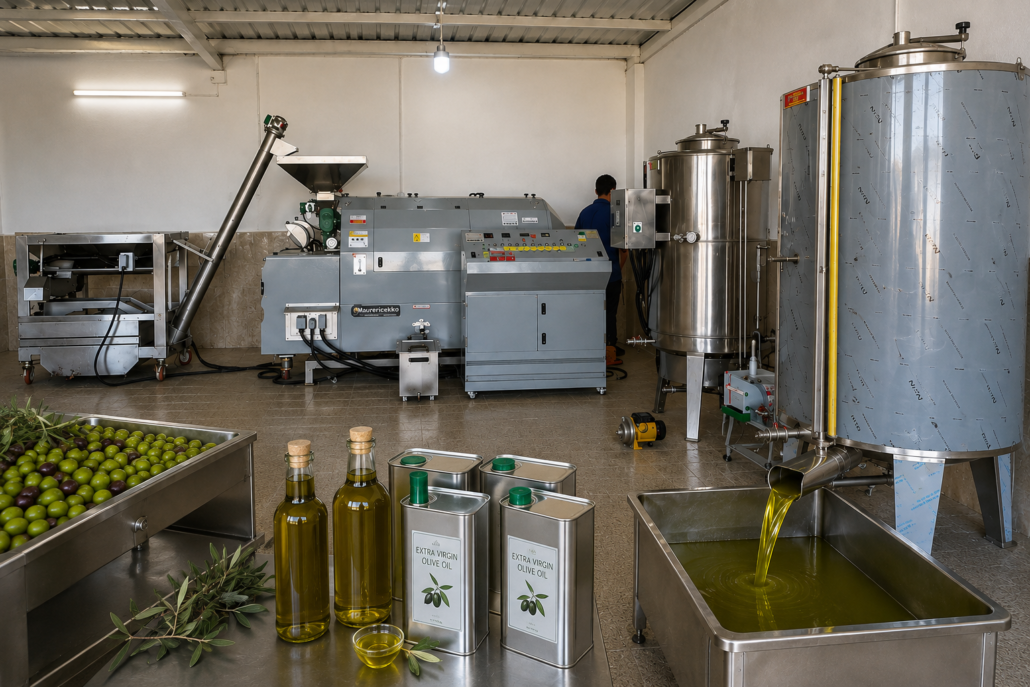
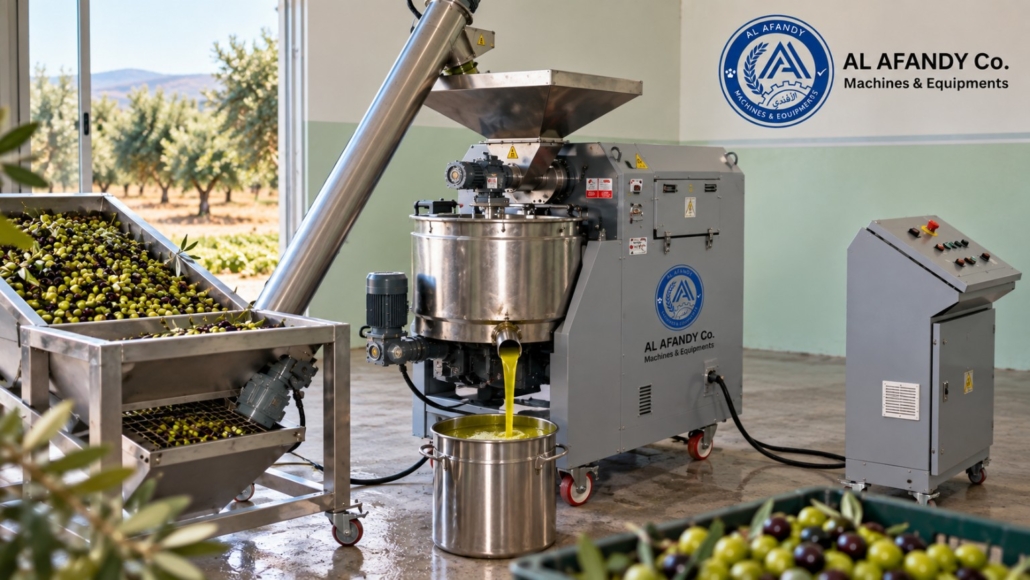
The olive oil press is the heart of the project, but machine selection should start with the crop. Required capacity is calculated from the amount of olives, available harvest days and daily operating hours.
Available AL AFANDY Capacities
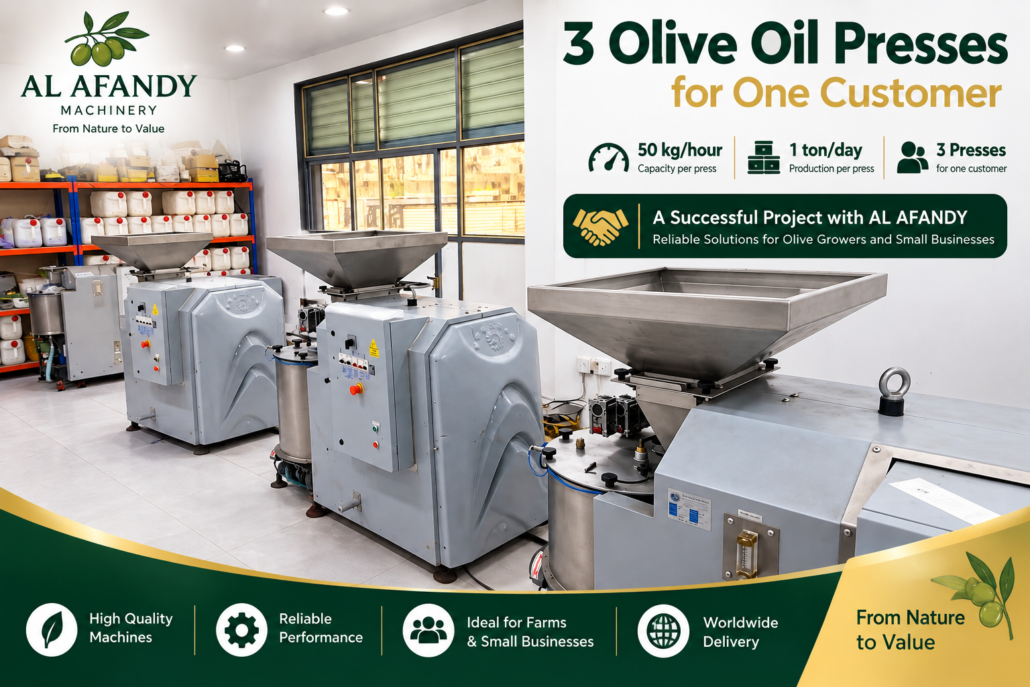
50 • 100 • 200 • 300 • 400 • 600 • 900 • 1200 kg/h with compact solutions and larger production lines according to project requirements.
Main Stages
olive feeding → leaf removal → washing → crushing → malaxation → centrifugal separation → final oil separation → filtration → storage → filling.
Small presses: for farmers, limited production, and seasonal services. Medium systems: for larger farms and commercial mills. Higher-capacity lines: for projects receiving crops from multiple farms and operating long hours.
✨ Olive Oil Filtration — Preparing Oil for Storage and Filling
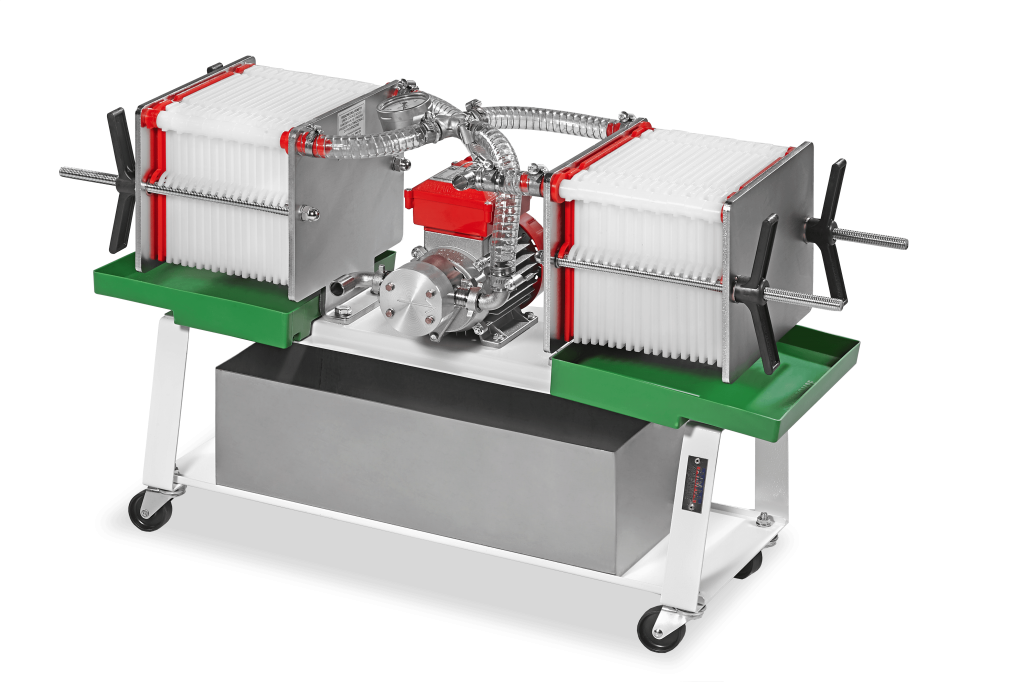
After separation, small amounts of water and suspended solids may remain in the oil. Plate filtration helps clarify the oil and prepare it for storage or filling.
Filter Position in the Line
press → collection tank → pump → plate filter → filtered-oil tank → filling.
Filter type, plate area, pump, and throughput are selected according to oil volume, viscosity, and required clarity. Filtration does not turn low-quality oil into Extra Virgin; fruit quality, processing, and storage remain fundamental.
🛢️ Olive Oil Storage Tanks — Protecting the Product
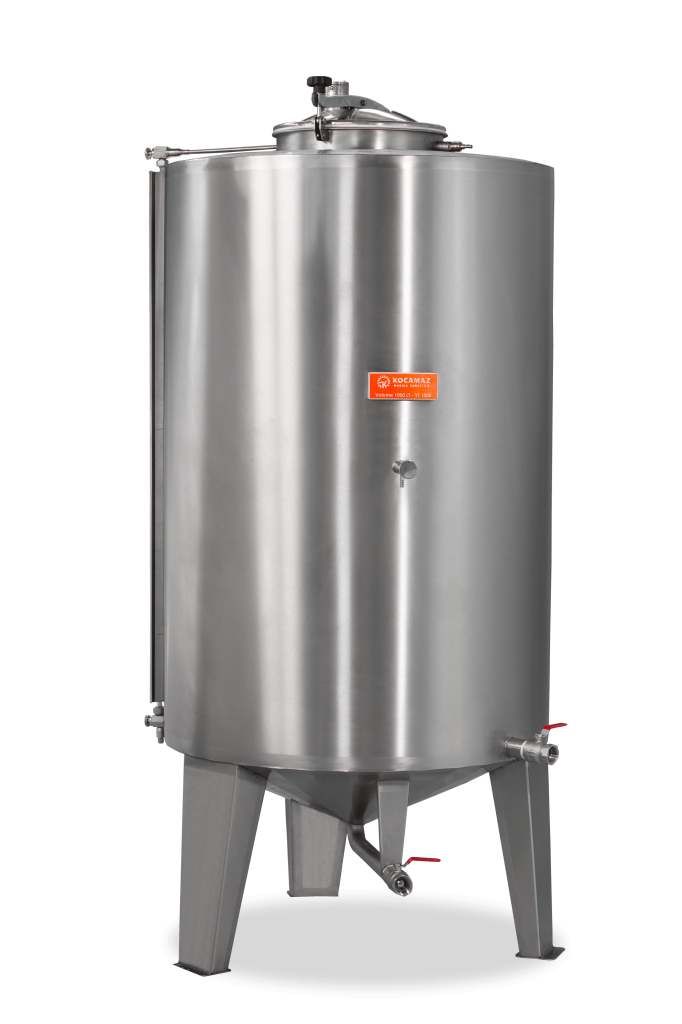
After extraction and filtration comes an equally important stage: storage. Food-grade tanks are used while exposure to light, heat and air is minimized as much as practical.
Workflow: oil from the press → settling/filtration as planned → stainless-steel tank → controlled transfer to filling.
Tank size and quantity should be calculated from daily production, number of varieties or growers, and the need to separate and trace batches.
🍾 Olive Oil Filling — From Bulk Oil to a Marketable Product
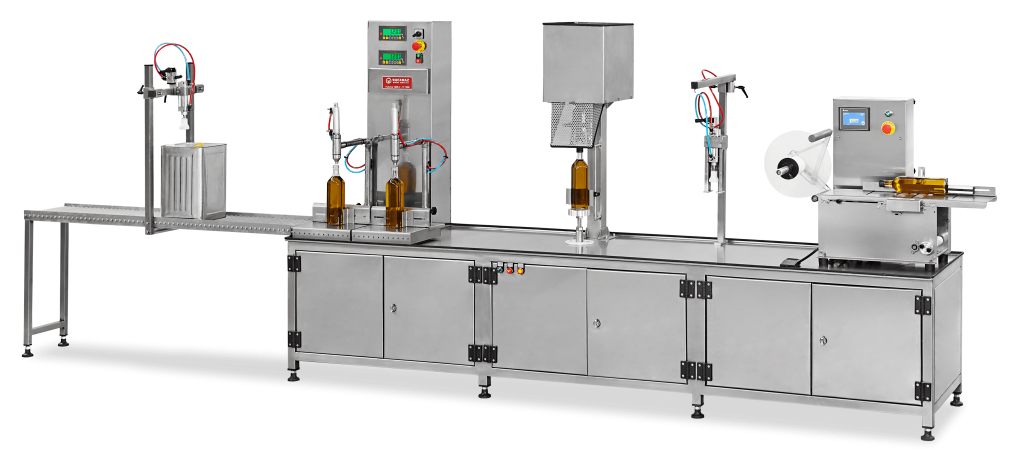
Filling is where bulk olive oil becomes a marketable product. The right filling unit depends on bottle size, required bottles per hour and the desired level of automation.
The Filling Line Can Include
oil tank → pump/feed → filling machine → capping → labeling → batch/date printing → cartoning.
Small and medium projects can start with a semi-automatic unit and expand to an automatic line as production grows.
♻️ Olive Pomace Briquette Press — Turning Residue into a Product
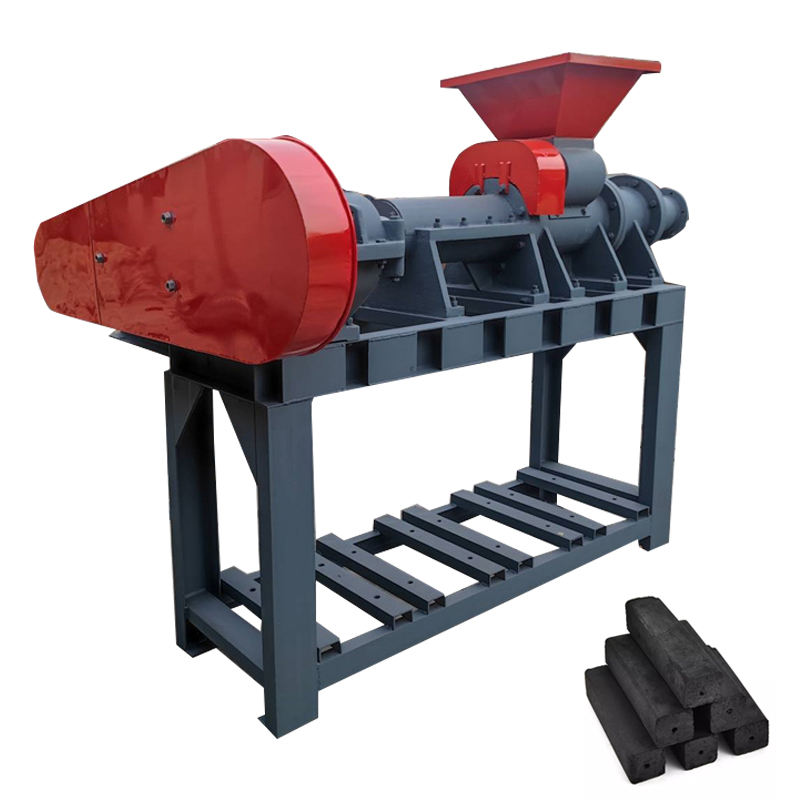
Instead of treating pomace only as waste, its moisture, composition and economics can be evaluated for a processing route that converts suitable solid material into compressed biomass fuel.
Possible Process Line
olive pomace → pit separation if needed → drying → grinding/homogenizing → briquette press → cooling → storage or packing.
The press alone is not enough; project success depends on material moisture, drying, energy consumption, briquette specifications, and the target market. Seasonal pomace volume should be calculated before sizing the processing line.
🏭 Complete Olive Processing — From Harvest to Product and By-products
🌳 Farm → 🚜 Harvesting → 🫒 Transport & Sorting → ⚙️ Olive Press → ✨ Filtration → 🛢️ Storage → 🍾 Filling → 🏷️ Brand
In parallel:
🌿 Leaves → Drying / Grinding / Extraction
⚫ Pits → Separation / Drying / Biomass
🟤 Pomace → Drying → Briquette Press
🌳 Pruning → Chipping / Drying / Biomass Fuel
This turns the olive mill into the center of an integrated business, not simply a machine for extracting oil.
🧮 12. Calculate Your Project
Start with the number of trees and expected crop, then calculate operating hours and the appropriate olive-press capacity.
📚 13. Scientific References and Standards
This encyclopedia is developed using reference sources including:
- International Olive Council — olive oil classifications and definitions
- International Olive Council — table olives
- IOC — standards, analytical methods, and quality management
- FAO — olive by-products
- scientific review — polyphenol extraction from olive leaves
The encyclopedia will continue to expand with dedicated articles and updated references as newer standards and research become available.
AL AFANDY — From Olive Tree to a Complete Business
Do you have an olive farm? Send the number of trees, average crop and project country, and we can define the processing stages and suitable equipment.
AL AFANDY COMPANY
Yıldızevler mah, 708 cad, 18/3, Çankaya, Ankara, Türkiye
00905359229816
00905307378600
Ashur Mall, Mosul-Iraq
Al-Rasheed st, Baghdad -Iraq
Jaznzuor, Tripoli-Libya
Jeddah – Saudi Arabia
OFFICE HOURS
Saturday – Thursday
09:00 – 16:00